
8 Small Kitchen Fixes That Make Your Space Feel Bigger
Discover 8 designer-approved kitchen fixes that make any small kitchen feel bigger, from ceiling-height cabinets to seamless stone backsplashes.
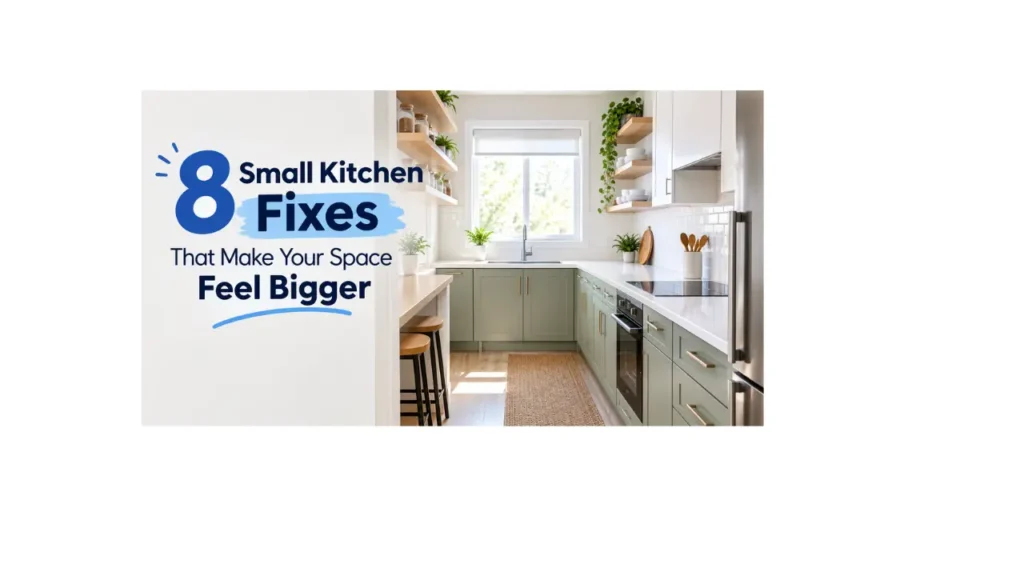
A small kitchen doesn’t have to feel cramped. With the right design choices, even a compact galley or single-wall layout can feel open and airy. Designers who work with tight footprints every day have go-to tricks that create the illusion of space without knocking down a single wall.
In this article, you’ll learn eight practical, designer-approved fixes—from cabinet height to countertop details—that can make a small kitchen feel noticeably bigger. Most of these can be worked into an existing kitchen without a full renovation.
Extend Cabinets to the Ceiling
One of the simplest ways to make a small kitchen feel larger is to stop the cabinets short of the ceiling less often. When there’s a gap above the upper cabinets, it draws the eye upward and highlights how low the ceiling actually is.
Designers often recommend running cabinetry all the way to the ceiling instead. This removes the awkward, dust-collecting gap and creates one continuous line from floor to ceiling. The kitchen ends up feeling taller and more intentional.
If floor-to-ceiling cabinets aren’t in the budget, adding crown molding or a shallow upper shelf to close the gap can still help. The goal is to remove the visual “stop” that makes a room feel boxed in.
Stick With Soft Colors and Simple Silhouettes on Cabinetry
Dark, heavily detailed cabinetry can visually shrink a small kitchen. Ornate panels, deep colors, and busy hardware all add visual weight, making a compact space feel more crowded.
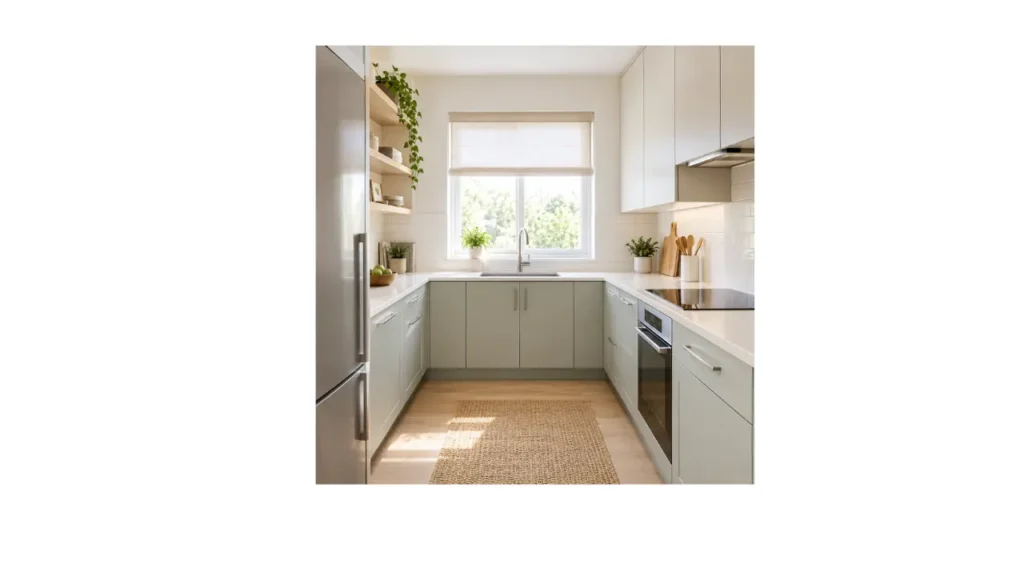
Many designers lean toward soft, light colors—warm whites, soft greiges, or muted sage tones—paired with clean, flat-panel or simple shaker-style doors. Lighter tones reflect more light, which helps a small room feel brighter and more open.
Simplicity matters as much as color. A door with minimal detailing reads as calmer than one with heavy trim work. When every surface stays quiet and uncomplicated, the whole space feels more breathable. This doesn’t mean the kitchen has to be boring—personality can still come through hardware or lighting.
Choose a Stone with Calm Movement
Countertop material plays a bigger role in perceived space than most people realize. A stone with wild, high-contrast veining can be beautiful, but in a small kitchen, it can feel overwhelming.
Designers often suggest a stone—natural like marble or quartzite, or engineered quartz—with subtle, calm movement. Soft gray veining on a white background adds interest without competing for attention. The countertop still feels elevated, just not loud.
A quieter pattern lets the eye rest, which adds to that sense of openness. It also tends to age better stylistically, since bold patterns can feel dated faster. When shopping, it helps to view a full slab rather than a small sample, since vending looks different at scale.
Run the Countertop Stone into the Backsplash
A full-height stone backsplash—where the countertop material continues up the wall—is one of the most popular tricks for making a small kitchen feel seamless and larger.
When the countertop and backsplash match, there’s no visual break where one material stops and another begins. That continuous surface removes grout lines and color transitions that chop up the wall visually. The result reads as smoother and more spacious.
This works especially well behind a stove or sink, where a full slab also cuts down on grout that needs cleaning. It’s a bigger upfront cost than standard tile, but many designers consider it one of the highest-impact upgrades for a small kitchen. Large-format tile in a matching tone can create a similar, if less dramatic, effect.
Pay Attention to Countertop Seams
Seams are a detail homeowners rarely think about until they’re staring at one every day. In a small kitchen, a visible seam across a prominent section can break up the surface and make it feel more segmented.
Good fabricators plan seam placement carefully, positioning them in less visible spots—like near a corner or the sink base—rather than in an open expanse. A well-placed seam is nearly invisible; a poorly placed one draws the eye constantly.
It’s worth asking a fabricator specifically where seams will fall before the stone is cut. This matters even more with patterned stone, since seams need to line up with the veining to avoid an obvious break in the pattern.
Keep the Countertop Edge Slim
Countertop edge profiles might seem minor, but they affect how heavy or light a kitchen feels. Thick edges—like a rounded bullnose or deep double-stack edge—add visual mass and can make a small kitchen feel more closed in.
A slim, simple profile, such as a straight eased edge, keeps the countertop looking light and unobtrusive. It lets the material and color stand out rather than the edge itself, contributing to that airy feeling designers aim for.
Edge profiles are often chosen at the very end of a renovation, so it’s easy to overlook this detail. But specifying a slimmer edge early on can make a real difference in how the finished kitchen feels day to day.
Be Consistent with Metal Finishes
Mixing metal finishes has been trendy, but in a small kitchen, too much variety can create clutter. Brass faucets, chrome pulls, and stainless appliances all competing for attention can make a compact space feel busier than it needs to be.
Designers generally recommend picking one or two finishes and using them consistently. Pairing brushed brass hardware with matching brass fixtures, for example, creates a cohesive, intentional look.
Consistency helps the eye move smoothly around the room instead of jumping between finishes. This small choice contributes to a sense of calm and order, which in turn makes the space feel larger. If existing fixtures don’t match, hardware is often the easiest place to unify the look, since pulls and knobs are relatively cheap to swap.
Invest in Good Under-Cabinet Lighting
Lighting has a bigger impact on how spacious a kitchen feels than most people expect. Under-cabinet lighting brightens the countertop workspace and eliminates shadows that overhead lighting alone tends to cast.
Well-placed under-cabinet lights illuminate backsplashes and countertops evenly, helping materials look their best and the whole kitchen feel brighter. LED strip lighting is a popular, energy-efficient option that’s fairly simple to install, even without a full rewiring project.
Beyond function, good lighting adds warmth and polish that makes a small kitchen feel more finished. A well-lit countertop draws attention to the details discussed above—the slim edge, the calm stone, the seamless backsplash—rather than leaving them in shadow. Combined with natural light where possible, layered lighting is one of the most cost-effective upgrades for making a small kitchen feel bigger and brighter.