
Design and Grow a Beautiful Garden for Every Season
Create a beautiful garden for every season with expert tips, inspiring ideas, and easy ways to keep your outdoor space fresh, colorful, and inviting.
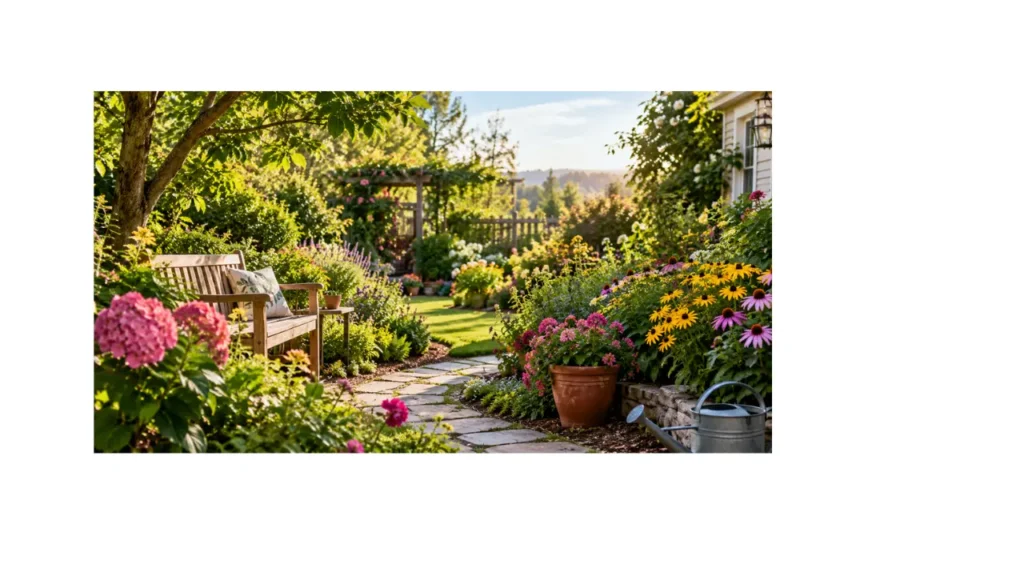
A beautiful garden comes from smart, timely decisions, not just talent. Learn what to plant, when to care for your lawn and patio, and how to manage plants, pests, and wildlife throughout every season.
What to Plant in September for Spring Success in 2027
September is the most underrated month in the gardening calendar. The soil is still warm from summer, the air has cooled, and rainfall is picking up. That combination is close to perfect for root growth.
Roots planted now spend autumn quietly establishing underground. Come March, those plants are ready to grow the moment temperatures rise — weeks ahead of anything you plant in spring.
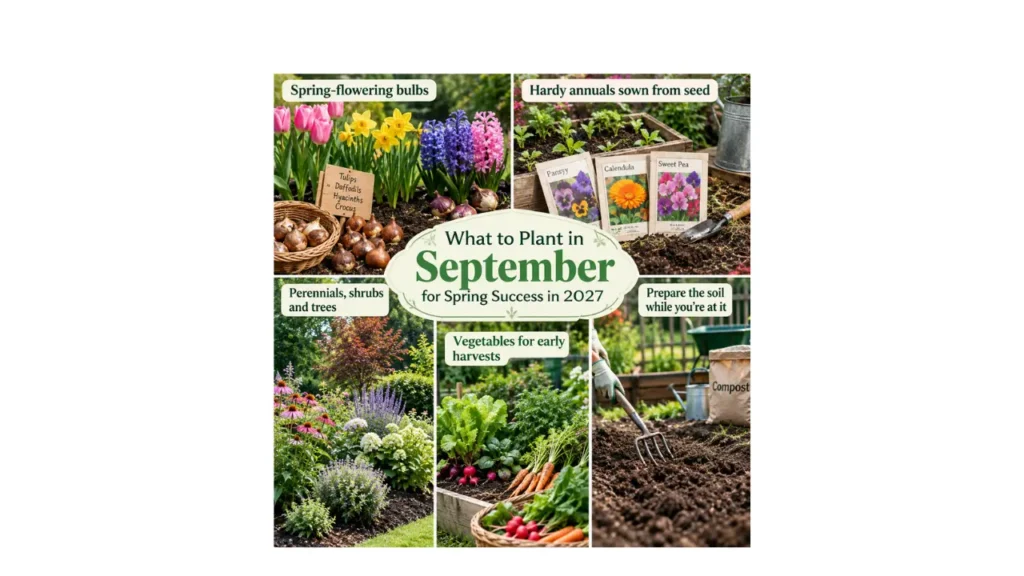
Spring-flowering bulbs
This is the headline job. Daffodils, crocuses, hyacinths, alliums, and muscari all go in from September onward.
The rule of thumb is simple: plant each bulb at roughly three times its own depth, pointy end up. A daffodil bulb about 5 cm tall goes in a 15 cm hole.
Plant in clusters of seven or more rather than neat rows. Nature doesn’t do straight lines, and drifts of colour look far more convincing than soldiers on parade.
Tulips are the exception. Hold them back until late October or November — colder soil reduces the risk of a fungal disease called tulip fire.
Hardy annuals sown from seed
Sow calendula, larkspur, cornflowers, poppies, and sweet peas directly into prepared soil in early September.
These seedlings will sit small through winter and then race away in spring, flowering four to six weeks earlier and on sturdier stems than spring-sown plants. Sweet peas in particular reward autumn sowing with noticeably longer stems for cutting.
Perennials, shrubs and trees
Autumn is the ideal window for planting anything permanent. Lavender, salvias, hardy geraniums, roses, hydrangeas, fruit trees, and native hedging all settle in well now.
Water them thoroughly at planting, then let autumn rain do most of the work. A tree planted in September 2026 will need far less hand-watering next summer than the same tree planted in May.
Vegetables for early harvests
Garlic is the classic September crop — split a bulb into cloves and plant each one 5 cm deep, 15 cm apart. It needs a cold spell to form proper bulbs, and you’ll harvest next July.
Also worth sowing now: broad beans, overwintering onion sets, winter lettuce, spinach, and hardy varieties of spring cabbage.
Prepare the soil while you’re at it
Before you plant anything, spread 5 cm of compost or well-rotted manure over your beds. You don’t need to dig it in. Worms will pull it down over winter, and you’ll start 2027 with noticeably better soil structure.
Maintain a Beautiful Yard and Patio in Late Summer
Late summer is when gardens start to look tired. Leaves go crispy, pots dry out, and the patio quietly collects a summer’s worth of grime.
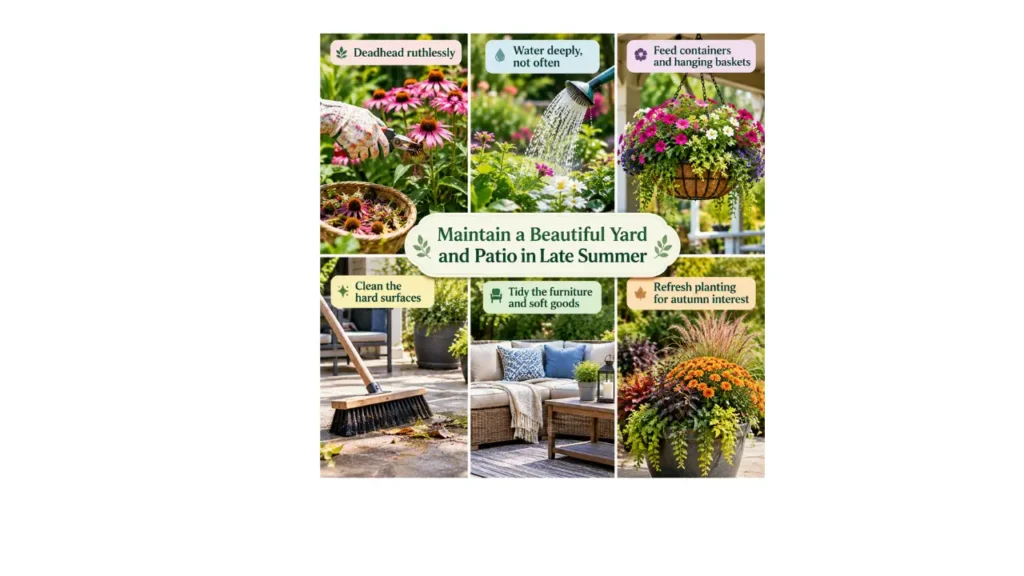
A few focused hours now keeps everything looking cared for well into autumn.
Deadhead ruthlessly
Removing spent flowers tells the plant it hasn’t finished reproducing yet, which pushes it to produce more blooms.
Dahlias, cosmos, roses, petunias, and geraniums will all keep flowering into October if you deadhead weekly. Cut back to just above a leaf joint rather than snapping off the flower head alone.
Water deeply, not often
A light daily sprinkle encourages shallow roots. A long soak two or three times a week pushes roots down where the soil stays damp.
Water early morning or evening so less evaporates. For containers, water until you see it running from the drainage holes — that’s the only reliable sign the whole rootball is wet.
Feed containers and hanging baskets
By late August, most potting compost has run out of nutrients. Pots that looked lush in June often look sulky by September.
A liquid tomato feed every ten days restores flowering quickly. It’s high in potassium, which plants use to produce blooms rather than leaves.
Clean the hard surfaces
Patios and decking accumulate green algae through summer, especially in shade. That film is slippery once autumn rain arrives.
Sweep thoroughly, then scrub with warm soapy water and a stiff brush. A pressure washer works on concrete and stone, but keep it off soft sandstone and older decking — it strips the surface.
Re-sand any block paving joints afterwards. It stops weeds and keeps the pavers locked together.
Tidy the furniture and soft goods
Wash cushion covers, oil hardwood furniture, and check the seams on your parasol. Doing it now, while the weather is still dry, means everything goes into storage clean rather than damp.
Damp storage is how good cushions turn mouldy over winter.
Refresh planting for autumn interest
Swap tired summer bedding for plants that peak later: ornamental grasses, sedum, Japanese anemones, asters, and heuchera.
A single large pot of grass beside a seating area changes the whole feel of a patio in September, when low sunlight catches the seed heads.
Explore Gardens
Every garden project falls into one of a handful of categories. Understanding them makes it easier to spot what your own space actually needs.
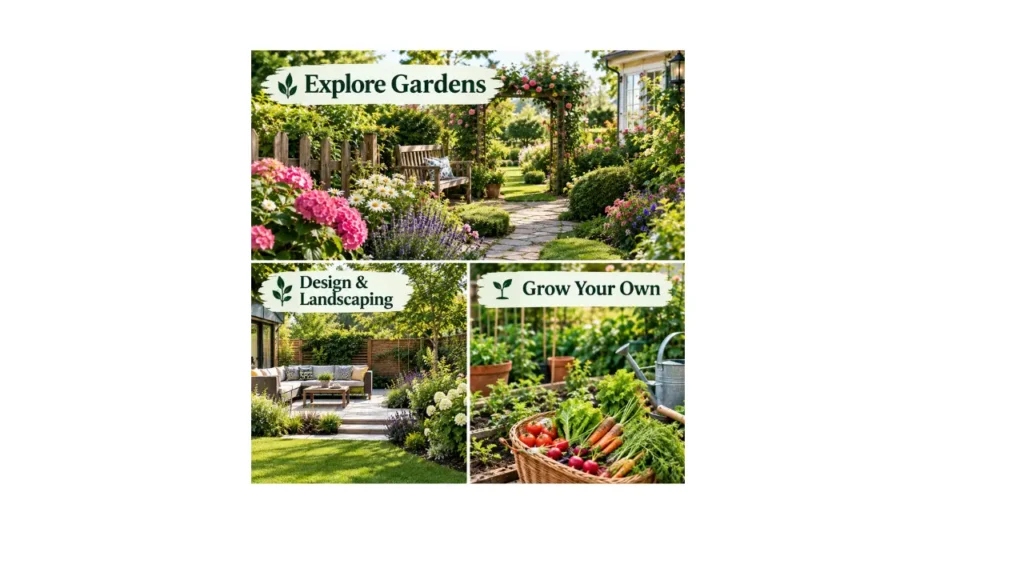
Design & Landscaping
Good design is mostly about structure. Before you think about plants, think about shapes — where paths run, where you’ll sit, what you see from the kitchen window.
Work with three layers: something tall for the back or corners, something medium in the middle, and low ground cover at the front. That simple hierarchy makes almost any border look deliberate.
Repetition helps too. Using the same plant or the same material in three or four spots across a garden creates rhythm, and rhythm reads as professional.
Pay attention to sight lines. A bench positioned at the end of a path gives the eye somewhere to land, and instantly makes a small garden feel intentional rather than accidental.
Grow Your Own
Growing food is the fastest way to get hooked on gardening. The gap between a supermarket tomato and one picked warm off the vine is genuinely startling.
Start small and start with things that are expensive to buy or taste dramatically better fresh: herbs, salad leaves, cherry tomatoes, runner beans, and courgettes.
Salad leaves are the best beginner crop. Sow a short row every two weeks and you’ll have cut-and-come-again leaves for months from a single windowsill trough.
If you only have a balcony, look at dwarf varieties bred for containers. A 40 cm pot can hold a productive pepper plant or a bush tomato.
Houseplants
Indoor plants fail for one reason more than any other: overwatering. Roots sitting in wet compost can’t take in oxygen, and they rot.
Check with your finger. Push it 3 cm into the soil — if it feels damp, wait. Most houseplants would rather be slightly too dry than slightly too wet.
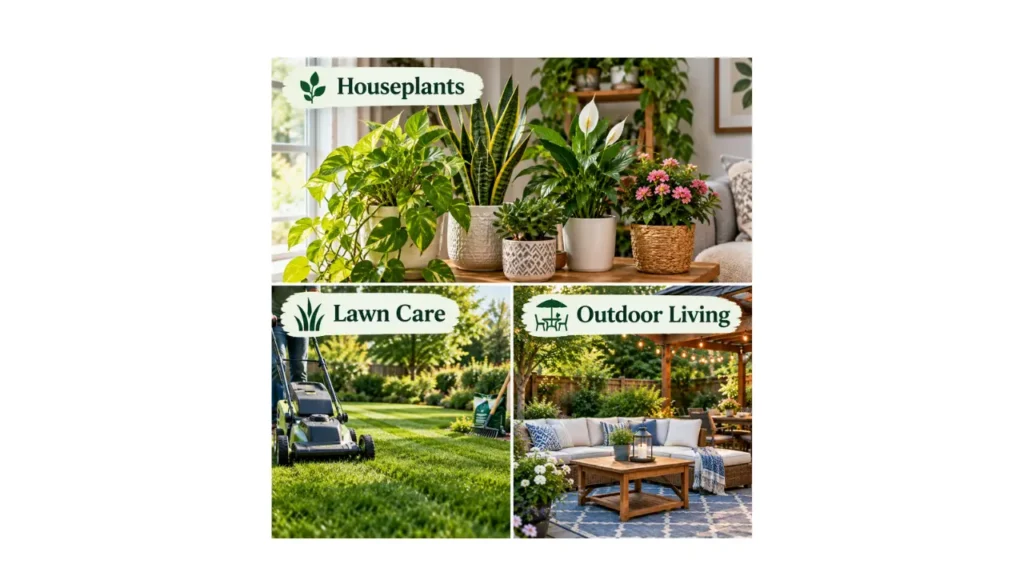
Match the plant to the light you actually have. Snake plants, ZZ plants, and pothos tolerate dim corners. Fiddle-leaf figs, succulents, and string of pearls need bright light near a window.
Dust the leaves every month or so. It sounds fussy, but a dusty leaf absorbs noticeably less light, and clean foliage simply looks better.
Lawn Care
September is prime lawn month. Grass roots grow enthusiastically in warm soil and cool air, which makes it the best time to repair summer damage.
Scarify to pull out the thatch — that spongy layer of dead material sitting at soil level. Then aerate by pushing a garden fork 10 cm deep every 15 cm across the lawn, rocking it slightly.
Overseed bare patches, apply an autumn feed high in potassium rather than nitrogen, and raise your mower blades slightly for the rest of the season.
Longer grass through autumn and winter photosynthesises more and shades out weed seedlings.
Outdoor Living
A garden you don’t sit in is just maintenance. Outdoor living is about making the space genuinely usable.
Lighting has the biggest impact for the smallest budget. Solar stake lights along a path, or warm string lights over a seating area, extend your evenings by hours.
Think about shelter too. A simple pergola, a sail shade, or even a well-placed hedge blocks wind and makes a patio comfortable on days it otherwise wouldn’t be.
Scent matters more than people expect. Plant lavender, jasmine, or night-scented stock beside where you sit, not at the far end of the garden.
Pest Control
Not every insect in your garden is a problem. Most are neutral, and a good number are actively helping you.
Start with the least aggressive option. Aphids can be washed off with a jet of water or squashed by hand. Slugs can be caught at dusk with a torch, or deterred with copper tape and beer traps.
Encourage natural predators instead of reaching for chemicals. Ladybirds, lacewings, hoverflies, birds, and frogs eat pests continuously and for free.
If you do use a treatment, apply it in the evening when bees aren’t flying, and target only the affected plant.
Plant Care
Most plant problems come down to three things: light, water, and soil. Diagnose in that order.
Yellowing lower leaves usually means overwatering. Crispy brown edges usually mean underwatering or scorching sun. Leggy, stretched stems mean not enough light.
Feed during the growing season, not during dormancy. Most plants want feeding from March through August and very little after that.
Prune with a purpose. Remove anything dead, damaged, or diseased first — that alone solves a surprising number of issues. Then thin crossing branches to improve airflow, which reduces fungal problems.
Wildlife
A garden full of wildlife is a garden that largely looks after itself. Birds eat caterpillars, hedgehogs eat slugs, and bees pollinate your crops.
Water is the single most effective thing you can add. A shallow dish with pebbles for insects to land on will attract more life than almost any plant.
Leave a corner messy. A pile of logs, some leaf litter, and a patch of long grass provide shelter for insects, frogs, and overwintering hedgehogs.
Plant for a long season of flowers. Crocuses and pulmonaria feed early bees in February, and ivy flowers feed them in October when little else is blooming.
Bringing It Together
A beautiful garden isn’t built in a weekend. It’s built in short, well-timed sessions across the year.
Plant bulbs in September. Clean the patio before the rain arrives. Scarify the lawn while the soil is warm. Each job is small on its own, but they compound.
By spring 2027, the ten minutes you spend planting daffodils this month will be the reason your garden looks alive while your neighbours’ are still waking up.

5 Comments