
18 Indoor Plants That Transform Living Rooms
Walk into any home that feels instantly warmer and more alive, and chances are there’s a plant involved. Not just any plant—the right one, in the right spot, doing exactly what it should.
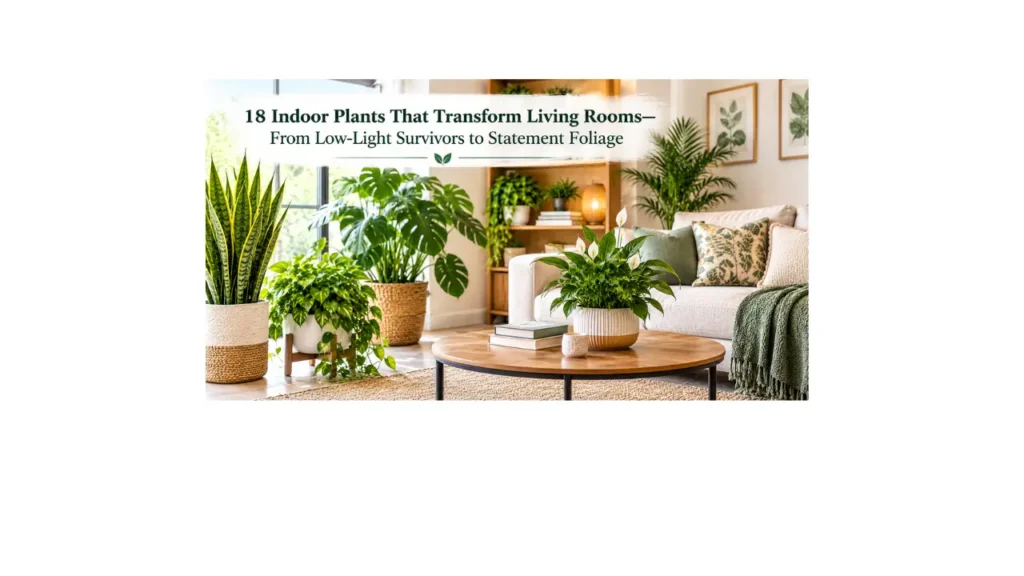
Indoor plants have moved past trend status. They’re now a default part of how people design living spaces, and for good reason. A well-placed fiddle-leaf fig or a cascading pothos does more for a room than most furniture purchases, and at a fraction of the cost.
But here’s the catch: not every plant suits every living room. Some need bright, direct sun. Others practically thrive on neglect. A few grow into dramatic six-foot statement pieces, while others stay compact and unassuming on a shelf.
This guide walks through 18 indoor plants that consistently transform living rooms—covering their light needs, care basics, and what makes each one worth the space it takes up. Whether you’ve got a sun-drenched bay window or a dim corner that needs life, there’s something here that fits.
Dieffenbachia
Dieffenbachia, often called “dumb cane,” brings bold, broad leaves splashed with cream, yellow, or pale green patterns. It’s a plant that reads as tropical and lush without demanding a greenhouse’s worth of attention.
It prefers bright, indirect light but tolerates medium light reasonably well. Water when the top inch of soil feels dry, and avoid letting it sit in soggy conditions—root rot is its main enemy.
One important note: dieffenbachia is toxic if chewed or ingested, so it’s worth keeping out of reach of curious pets and small children. Beyond that caution, it’s a forgiving, fast-growing plant that fills empty corners with texture and color.
Snake Plant
The snake plant (Sansevieria, now technically reclassified as Dracaena trifasciata) is the plant people recommend to anyone who claims they “can’t keep plants alive.” Its stiff, upright leaves have an architectural quality that works in modern and traditional living rooms alike.
It tolerates low light, irregular watering, and dry air better than almost any other houseplant. In fact, overwatering is the most common way people accidentally kill it.
Snake plants also have a reputation—somewhat exaggerated but rooted in truth—for improving indoor air quality by filtering certain toxins. Even without that bonus, their low-maintenance nature and sculptural shape make them a living room staple.
Bird of Paradise
Few plants make a statement quite like the bird of paradise. Its large, banana-like leaves and dramatic silhouette instantly evoke a tropical resort feel, even in a compact apartment.
This plant wants bright light—ideally a few hours of direct sun daily—to really thrive and eventually produce its signature orange-and-blue flowers indoors. Without enough light, it survives but stays leggy and flower-shy.
Give it a large pot, consistent watering (letting the top few inches dry out between waterings), and occasional leaf cleaning to keep dust off, and it rewards you with height, drama, and a genuinely showstopping presence near a bright window.
Kentia Palm
The Kentia palm is the palm variety interior designers reach for again and again, and it’s easy to see why. Its arching, feathery fronds add movement and softness without the fussiness of tropical prima donnas.
It handles lower light better than most palms, making it a strong option for living rooms that don’t get direct sun all day. Water moderately, letting the soil dry slightly between waterings, and keep it away from cold drafts.
Kentia palms grow slowly, which is actually a plus for many people—you get a mature, elegant plant that doesn’t outgrow its space every six months.
Corn Plant
Corn plant (Dracaena fragrans) gets its nickname from its long, arching leaves striped in green and yellow, resembling actual corn stalks. It’s a classic office and living room plant for a reason: it’s nearly indestructible.
It adapts to low to bright indirect light and only needs watering every one to two weeks, depending on conditions. Brown leaf tips usually signal either fluoride-sensitive tap water or dry air—switching to filtered water often solves it.
For anyone wanting height and structure without constant fussing, the corn plant delivers reliably.
Cast Iron Plant
The name says it all The cast iron plant (Aspidistra elatior) earned its reputation during the Victorian era, when it survived gas-lit, poorly ventilated parlors that killed most other houseplants.
It tolerates deep shade, irregular watering, temperature swings, and general neglect better than almost anything else on this list. Its broad, dark green leaves have a calm, grounding presence that suits reading nooks and shaded corners.
Growth is slow, so don’t expect rapid transformation. What you get instead is a dependable, low-drama plant that simply keeps showing up, season after season.
Monstera Deliciosa
Monstera deliciosa, with its iconic split leaves, has become almost synonymous with modern houseplant style. It shows up in interior design photos, art prints, and social feeds for good reason—those fenestrated leaves are genuinely striking.
It grows best in bright, indirect light and appreciates being wiped down occasionally to keep its leaves dust-free and glossy. Water when the top two inches of soil are dry, and provide a moss pole or trellis as it matures, since it’s naturally a climbing plant.
Given enough light and space, a Monstera can become the true focal point of a living room, with leaves eventually reaching a foot or more across.
Marble Queen Pothos
Marble queen pothos is a variegated cousin of the classic golden pothos, with leaves marbled in white and green. It’s one of the easiest trailing plants to grow, making it ideal for shelves, hanging baskets, or a bookcase edge where its vines can cascade down.
It handles a range of light conditions, though brighter indirect light keeps the variegation more pronounced. Let the soil dry out between waterings, and trim occasionally to encourage fuller growth.
Because it roots easily in water, it’s also one of the simplest plants to propagate and share with friends.
Chinese Money Plant
The Chinese money plant (Pilea peperomioides) has round, coin-shaped leaves on thin stems, giving it a playful, almost whimsical look. It’s compact enough for a side table but has enough personality to hold its own visually.
Bright, indirect light keeps it happiest, and it prefers to dry out slightly between waterings. It’s also famous for producing “pups”—small offshoot plants at its base—that can be separated and potted individually.
This makes it a favorite for plant lovers who enjoy propagating and gifting cuttings to friends and family.
Fiddle-Leaf Fig
The fiddle-leaf fig has a reputation as both a design darling and a notoriously particular houseplant. Its large, violin-shaped leaves create serious visual impact, which is why it’s become a go-to for modern living rooms.
It wants bright, indirect light and consistency—consistent watering, consistent placement, and minimal disruption. Sudden changes in environment often trigger leaf drop, so once you find a spot it likes, resist the urge to move it around.
Despite the fussy reputation, a well-situated fiddle-leaf fig rewards patience with dramatic height and a genuinely gallery-worthy presence.
ZZ Plant
The ZZ plant (Zamioculcas zamiifolia) has thick, waxy, dark green leaves that almost look artificial in their glossy uniformity. It’s a plant built for people with busy schedules or inconsistent light.
It tolerates low light and irregular watering exceptionally well, thanks to rhizomes that store water underground. In fact, overwatering is far more likely to cause problems than underwatering.
Its clean, symmetrical growth pattern makes it a favorite for minimalist living rooms where structure matters more than sprawl.
Swiss Cheese Plant
Not to be confused with Monstera deliciosa, the true Swiss cheese plant (Monstera adansonii) has smaller, more delicately perforated leaves and a naturally trailing or climbing habit. It’s often grown in hanging baskets or trained up a small trellis.
It prefers bright, indirect light and slightly moist (not soggy) soil. Given a humid environment, it grows quickly and produces those signature holes more readily.
For living rooms wanting Monstera-style texture on a smaller scale, this is often the better fit.
Satin Pothos
Satin pothos (Scindapsus pictus) has heart-shaped, velvety leaves speckled with silver, giving it a soft, almost shimmering quality under indoor light. It trails similarly to regular pothos but with a more textured, jewel-toned look.
It adapts well to medium to bright indirect light and prefers to dry out between waterings. Its slower growth compared to golden pothos makes it easier to keep tidy on a shelf or mantel.
The subtle sheen on its leaves catches light beautifully, adding quiet visual interest without overwhelming a space.
Red Chinese Evergreen
Chinese evergreens are known for their tolerance of low light, and the red-variegated varieties (Aglaonema) bring an unexpected pop of color—streaks of pink, red, or coral running through the foliage.
They handle low to medium indirect light well, though the red coloring intensifies with slightly brighter conditions. Water when the top inch of soil dries out, and keep them away from cold drafts.
For living rooms that lean neutral in color palette, a red Chinese evergreen adds warmth and personality without requiring a full redesign.
Hoya Carnosa
Hoya carnosa, sometimes called wax plant, has thick, succulent-like leaves and, under the right conditions, produces clusters of star-shaped, fragrant flowers. It’s a slow, steady grower that rewards long-term patience.
Bright, indirect light and infrequent watering suit it best—letting the soil dry out fully between waterings mimics its natural epiphytic habitat. It can be trained on a trellis or left to trail from a hanging pot.
Its flowers, when they appear, release a subtle sweet scent, making it as much a sensory plant as a visual one.
Triostar Stromanthe
Triostar stromanthe is grown almost entirely for its striking foliage—leaves splashed in green, cream, and hot pink, with deep maroon undersides. It’s one of the most visually dramatic plants on this list.
It’s also one of the pickier ones, preferring consistent humidity, bright indirect light, and evenly moist soil. Dry air or inconsistent watering shows up quickly as crispy leaf edges.
For living rooms with a humidifier or naturally humid conditions, though, the payoff is a plant that looks almost painted.
String of Nickels
String of Nickels (Dischidia nummularia) is a lesser-known trailing succulent with small, round, coin-like leaves densely packed along thin vines. It’s an understated choice that adds texture to hanging displays or high shelves.
It prefers bright, indirect light and infrequent watering, similar to other succulent-adjacent plants. Its dense, cascading growth habit makes it a good pairing alongside bolder statement plants.
Because it’s still relatively uncommon in mainstream plant shops, it’s also a nice way to add something a little different to a living room’s plant collection.
Elephant Ear
Elephant ear plants (Alocasia or Colocasia varieties) are named for their enormous, heart- or arrow-shaped leaves that can stretch a foot or more in length. Few plants create instant drama the way elephant ears do.
They prefer bright, indirect light and consistently moist soil, along with higher humidity when possible. Given the right conditions, they grow quickly and can dominate a corner within a single growing season.
For anyone wanting a jungle-like, larger-than-life feel in their living room, elephant ears deliver scale and visual weight few other houseplants can match.
Bringing It All Together
The best living room plant isn’t necessarily the trendiest one—it’s the one that matches your light, your schedule, and the mood you’re trying to create. A snake plant and a ZZ plant will keep a dim apartment corner alive with almost no effort. A fiddle-leaf fig or elephant ear, given a bright spot and a little patience, becomes the room’s centerpiece.
Mixing textures works well too. Pair broad, dramatic leaves like Monstera or bird of paradise with trailing varieties like pothos or Hoya to create layers and movement. Add a pop of color with a red Chinese evergreen or Triostar stromanthe, and the room starts to feel curated rather than accidental.
Start with one or two plants suited to your actual light conditions, not your aspirational ones. From there, the living room tends to build itself—one leaf, one shelf, one sunny corner at a time.
FAQ’s
1. What are the best low-light indoor plants for a living room?
Snake plant, ZZ plant, cast iron plant, and corn plant handle low light and irregular watering the best.
2. Which indoor plants are safe if I have pets or small children?
Chinese money plant and satin pothos are pet-safe options, while snake plant, ZZ plant, and dieffenbachia should be kept out of reach.
3. How often should I water indoor plants like Monstera or fiddle-leaf fig?
Water them roughly every 7–10 days, once the top 1–2 inches of soil feel dry.
4. Which plant is best for adding height and drama to a living room?
Bird of paradise, elephant ear, and Kentia palm all deliver bold height and dramatic foliage.