
Importance of Gardening
Discover the importance of gardening for health, home, kids, and the planet, plus simple tips to help beginners grow their own food.
Gardening isn’t just for people with big backyards or years of experience. It’s a simple habit that can change how you eat, how you feel, and how you connect with the world around you.
In this article, you’ll learn what gardening really means and how it supports your body and mind. You’ll also see what it does for the environment, your family, and your community. Finally, you’ll get practical tips to start your own garden, even if you’ve never held a trowel.
What Is Gardening and Why Is It Important?
Gardening is one of the oldest things humans do. Long before supermarkets existed, people grew their own food, herbs, and medicine.
Today, we don’t have to garden to survive. Many of us choose to anyway, and the reasons go well beyond food.
What Does Gardening Mean?
Gardening means growing and caring for plants on purpose. Those plants might be vegetables, herbs, flowers, fruit trees, or simple houseplants.
It doesn’t need a lot of land. A few pots on a balcony count. So does a sunny windowsill with a pot of mint, or a raised bed behind the house.
At its core, gardening is about small, regular acts of care. You water, you watch, you adjust. In return, something living grows.
Why Is Gardening Important in Everyday Life?
The importance of gardening shows up in ordinary moments. Picking fresh basil for dinner. Stepping outside for ten minutes between work calls. Watching a seed you planted push through the soil.
These small experiences add up. Gardening gets you moving, gives you fresh food, and pulls you away from screens.
It also gives daily life a gentle rhythm. Plants need attention, so you have a reason to go outside, slow down, and notice the weather and the seasons.
What Are the Benefits of Gardening?
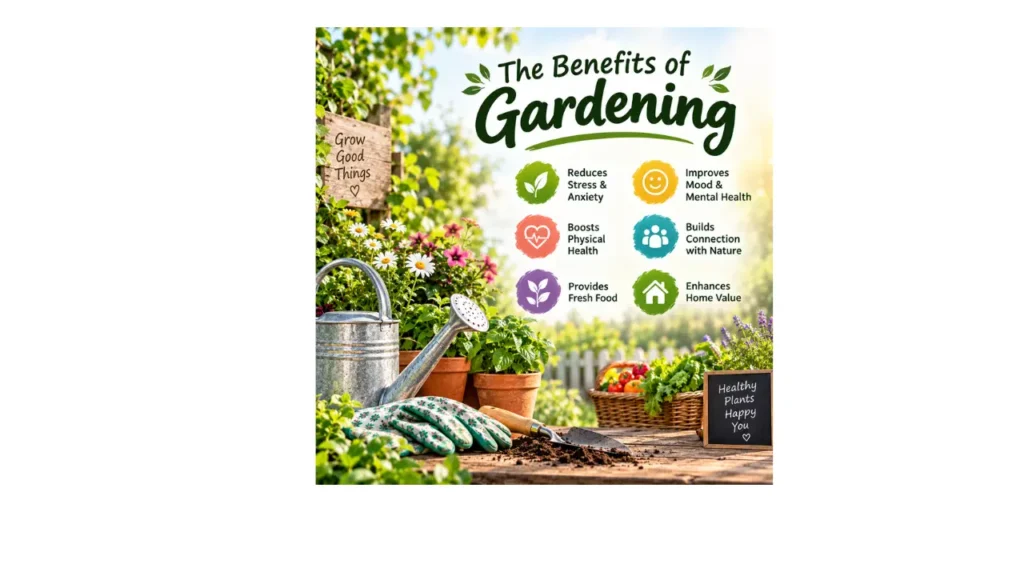
The benefits of gardening reach almost every part of life. Some are physical, some are emotional, and some are surprisingly practical.
Here’s a closer look at what regular time in the garden can do for you.
Physical Health Benefits of Gardening
Gardening is real exercise, even if it doesn’t feel like it. Digging, raking, lifting bags of soil, and pulling weeds work your arms, legs, back, and core.
An hour of moderate gardening can burn about as many calories as a brisk walk. It also improves flexibility, grip strength, and balance.
Time outside means sunlight too, which helps your body make vitamin D. And people who grow vegetables tend to eat more of them.
Gardening is gentle enough for older adults, too. It keeps joints moving without the pounding of high-impact workouts. Just wear a hat, drink water, and lift with your knees.
Mental Health Benefits of Gardening
Ask any gardener how they feel after an afternoon with their plants. Most will say calmer, lighter, and a little proud.
Being around greenery is linked with better mood and clearer thinking. Gardening also gives you a sense of purpose, since living things depend on you.
There’s a lesson in patience here as well. Seeds take time. Some plants fail no matter what you do. Learning to shrug, adjust, and try again builds resilience that carries over into other parts of life.
Gardening isn’t a replacement for professional support when you need it. But it can be a healthy, low-cost habit that sits alongside other forms of care.
How Gardening Helps Reduce Stress and Anxiety
Modern life is loud. Notifications ping, deadlines pile up, and your mind rarely gets a rest.
Gardening quietly changes that. When you’re pressing seeds into soil or trimming leaves, your attention settles on the task in front of you. It works a lot like mindfulness, without any special training.
The repetition helps too. Watering, weeding, and pruning are simple, predictable jobs. They give an overloaded mind something steady to hold onto.
Many people also find that being outdoors improves their sleep. Even fifteen minutes among plants can make a stressful day feel more manageable.
Importance of Gardening for the Environment
Every garden is a small ecosystem. Even a few pots can make a difference, and when neighbors join in, the effect grows.
The environmental side of gardening often gets overlooked, but it’s one of the strongest arguments for taking it up.
How Gardening Helps Improve Air Quality
Plants take in carbon dioxide and release oxygen. Trees, shrubs, and even climbing vines also catch dust and airborne particles on their leaves.
That matters most in crowded cities, where traffic and construction fill the air with pollution. A green balcony or a row of hedges won’t fix everything, but it does help.
Plants also cool their surroundings. Concrete and asphalt trap heat, while shaded, leafy spaces stay noticeably cooler in summer.
Composting adds another benefit. Turning kitchen scraps into soil food keeps waste out of landfills and makes your garden healthier.
How Gardens Support Bees, Birds, and Other Wildlife
Bees and butterflies are struggling in many parts of the world. Habitat loss and pesticides are big reasons why.
A garden with flowers gives pollinators food and shelter. Since many of our crops depend on pollination, that support matters for everyone who eats.
Birds benefit too. Native shrubs offer berries and nesting spots, while a shallow dish of water can bring in visitors all summer.
You don’t need much space. A few flowering herbs like lavender, coriander, and basil left to bloom can attract bees within weeks.
Importance of Gardening at Home
A home garden turns your living space into something more than a place to sleep and eat. It becomes somewhere you make things.
It also changes how the whole household spends time, eats, and even talks to each other.
Benefits of Growing Plants in a Home Garden
Plants make a home feel alive. Greenery softens hard corners, brightens rooms, and gives you something to look at besides a screen.
A home garden can also save money. A packet of seeds costs very little compared with what the harvest would cost at the market.
There’s a practical side too. Well-kept landscaping raises curb appeal, and shade trees can lower cooling costs in hot months.
Then there’s the simple pleasure of it. Coming home to a garden you built yourself is hard to beat. The importance of gardening at home often comes down to that quiet satisfaction.
How Home Gardening Provides Fresh Fruits and Vegetables
Homegrown produce is picked when it’s ripe, not weeks before it reaches a shelf. That usually means better flavor.
Some crops are especially easy. Lettuce, spinach, tomatoes, chilies, beans, and herbs like mint and coriander grow well for beginners.
You also pick only what you need. That cuts food waste and keeps meals fresh.
For families dealing with rising grocery prices, even a small plot can help. A few tomato plants and a pot of herbs won’t replace the market, but they’ll trim the bill.
Importance of Gardening for Children
Kids spend more time indoors than earlier generations did. Gardening offers a simple, hands-on way to bring them back outside.
It also turns learning into something they can touch, smell, and taste.
How Gardening Helps Children Learn About Nature
A garden is a living classroom. Children see how a seed becomes a plant, how rain and sun affect growth, and how insects fit into the picture.
They pick up math as they count seeds and measure sprouts. They learn responsibility too, because a plant that isn’t watered will wilt.
Children who grow vegetables are also more likely to try eating them. A carrot they pulled from the ground feels different from one on a plate.
To start, give each child a small pot or a corner of the garden. Choose fast growers like radishes, sunflowers, or cress so they see results quickly. Then let them get muddy.
Importance of Gardening for a Healthy Lifestyle
A healthy lifestyle isn’t only about gym memberships and diets. It’s built from small daily habits, and gardening fits neatly into that.
It supports what you eat, how much you move, and how you handle stress, all in one activity.
How Gardening Encourages an Active Lifestyle
Gardening keeps you moving without feeling like a workout. You bend, stretch, carry, and walk, often for an hour or more without noticing the time.
Because it’s enjoyable, it’s easier to stick with than many exercise routines. Plants need attention every few days, which builds a natural habit.
Seasons add variety. Spring means planting and preparing beds. Summer brings watering and harvesting. Autumn calls for clearing and composting.
That steady change keeps you active all year, which is a big part of the importance of gardening for long-term health.
Importance of Growing Your Own Food
Growing your own food changes your relationship with what’s on your plate. You see how long it takes, how much care it needs, and how much waste is easy to avoid.
It also gives you control over what goes into your meals.
Benefits of Growing Organic Vegetables and Herbs at Home
When you grow food yourself, you decide what goes on it. You can skip synthetic sprays and use natural methods like compost, mulch, and hand-picking pests.
Organic vegetables and herbs often taste stronger and fresher. A leaf of basil picked minutes before cooking is a different experience from a wilted bunch in plastic.
Start with plants that forgive mistakes. Mint, coriander, spinach, radishes, and cherry tomatoes are all good choices.
Homegrown food also adds a bit of security. When prices jump or supplies get disrupted, having some food at home gives your household breathing room.
Importance of Gardening for Community and Society
Gardens don’t just grow plants. They grow connections between people.
When neighbors work on green spaces together, streets feel friendlier and more cared for.
How Community Gardening Brings People Together
Community gardens turn empty lots into shared spaces. People meet, swap seeds, trade advice, and share extra vegetables.
They also bring generations together. Older gardeners pass down knowledge about soil and seasons, while younger people bring energy and new ideas.
Many neighborhoods report stronger trust and less isolation once residents start gardening side by side. Schools, mosques, and community centers often run their own garden projects as well.
Even if you garden alone, local nurseries, gardening clubs, and online groups make it easy to ask questions and share results.
How to Start Gardening for Beginners
Starting is easier than most people think. You don’t need expensive tools, perfect soil, or a big yard.
What you need is a little curiosity and a willingness to learn as you go.
Easy Gardening Tips for Beginners
Here are some simple steps to help you begin:
- Start small. A few pots or one raised bed is easier to manage than a large plot.
- Find the light. Most vegetables need about six hours of direct sun each day.
- Feed the soil. Mix in compost or well-rotted manure before planting.
- Pick forgiving plants. Herbs, leafy greens, radishes, and marigolds are great first choices.
- Match your climate. Choose crops that suit your local season and temperatures.
- Water deeply. Early morning or evening watering works better than a little every hour.
- Use mulch. Dry leaves or straw keep moisture in and weeds down.
- Check in daily. A few minutes each day helps you catch pests early.
Don’t worry about getting everything right. Every gardener loses a few plants. Each mistake teaches you something about your soil, your light, or your timing.
Small spaces work fine too. Grow herbs on a windowsill, tomatoes in buckets, or climbers up a balcony wall.
The importance of gardening isn’t something you fully understand by reading about it. You find out by planting one seed, watching it grow, and enjoying what it gives back. Start this week with a single pot. You might be surprised where it leads.
FAQs
Q1. What is the importance of gardening?
Gardening improves your health, mood, food supply, and local environment all at once.
Q2. Can gardening reduce stress and anxiety?
Yes, tending plants helps calm your mind and gives you a break from daily pressure.
Q3. Is gardening good for physical health?
Yes, digging, lifting, and weeding work your muscles and keep you moving.
Q4. How does gardening help the environment?
Plants clean the air, cool surroundings, and provide food and shelter for bees and birds.
Q5. Can I garden without a yard?
Yes, pots, window boxes, and balcony planters work well for herbs and vegetables.
Conclusion
The importance of gardening reaches your health, home, family, and community, and even one small pot can make a difference. Start with easy plants, give them a little daily care, and enjoy what grows.